
This article explains why quality control matters in custom metal fabrication and how a structured inspection workflow helps improve consistency, reliability and buyer confidence.
Quality Control Should Be Built Into the Entire Fabrication Process
Custom metal fabrication often involves multiple production steps, such as laser cutting, bending, welding, grinding, coating and assembly. Each stage can affect the final result, so quality control should never be treated as a single final checkpoint.
A strong quality workflow helps identify problems early, reduce rework and improve consistency before products reach the customer.
Material Verification at the Beginning of Production
The first step in any metal fabrication project is making sure the correct material is used. If material type, thickness or grade does not match the requirement, the finished product may not perform as expected.
Material verification helps confirm whether the production input matches the drawing, specification and application scenario. This early checkpoint reduces the chance of costly downstream errors.
In-Process Inspection During Fabrication
One of the biggest mistakes in fabrication projects is relying only on final inspection. By the time final inspection happens, correcting major issues may already be expensive or time-consuming.
During production, dimensional checks and workmanship review help identify problems related to cutting accuracy, bending deviation, welding quality or part shape. Early inspection makes it easier to adjust tooling, handling or process flow before the issue spreads across the batch.
Surface and Appearance Review Before Delivery
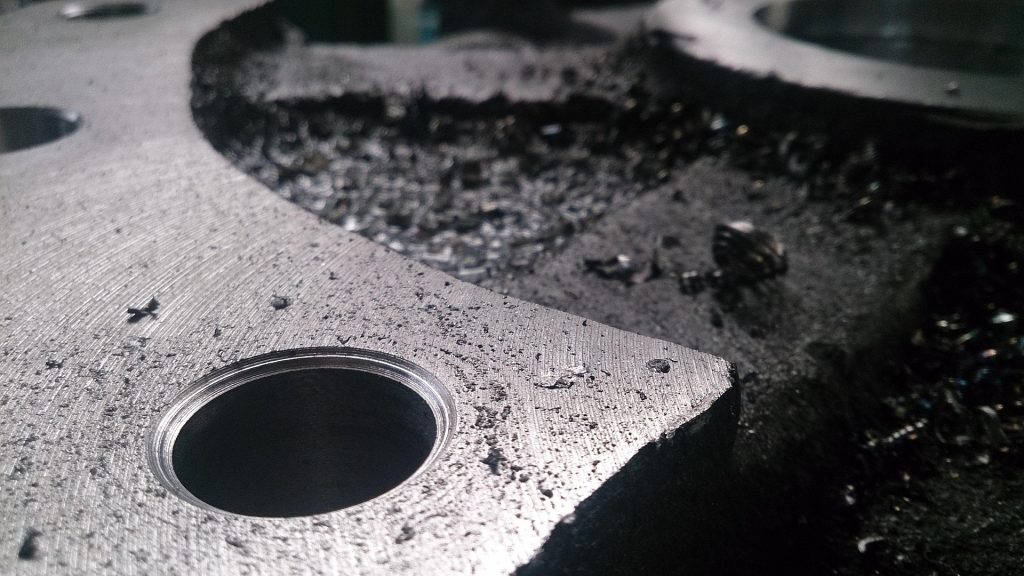
In many fabrication projects, appearance matters in addition to function. Surface scratches, rough edges, coating defects or inconsistent finishing may not always affect structural performance, but they can influence customer acceptance and final evaluation.
Surface inspection helps ensure that the finished product matches both technical needs and buyer expectations, especially for visible parts or equipment-related components.
A Practical Quality Workflow Improves Project Reliability
A supplier with a clear and repeatable inspection process is usually more reliable than one focused only on output speed or pricing. Quality control supports better production stability and creates more confidence for both sampling and repeat orders.
Trial Assembly and Structural Fit Verification
Some fabricated parts are used independently, while others must fit into larger structures, housings or equipment systems. In these cases, trial assembly or fit verification becomes an important part of quality control.
This step helps confirm hole alignment, structural matching, part compatibility and functional fit before shipment. It is especially useful for custom brackets, covers, frames and fabricated assemblies.
Final Inspection Before Packing and Shipment
Final inspection remains a necessary step before products are packed and shipped. A practical final inspection may include dimensional confirmation, quantity verification, surface review, packaging checks and documentation review where needed.
When earlier checkpoints are already in place, final inspection becomes more effective because it works as the last layer of control rather than the only one.
Why Buyers Should Pay Attention to a Supplier’s Quality System
When evaluating a fabrication supplier, buyers should not only ask about price and lead time. They should also understand how the supplier manages quality throughout the production process.
Questions Buyers Should Ask
Useful questions include how incoming materials are checked, what inspections are performed during production, whether assembly verification is available and what happens before products are packed and shipped.
These questions help buyers judge whether a supplier is focused only on completing orders or on building stable long-term cooperation through consistent quality.
Quality Stability Supports Repeat Orders
For industrial buyers, consistency matters just as much as price. In many cases, it matters more. A supplier with a practical quality control system is usually better positioned to support repeat production, reduce sourcing pressure and improve long-term project reliability.
Quality control in custom metal fabrication is not just a final checkpoint. It is a structured process that supports better outcomes across the entire manufacturing workflow.